Text Editor SDK
Building Grammarly’s first developer platform, bringing its writing assistance natively into third-party products.
Background
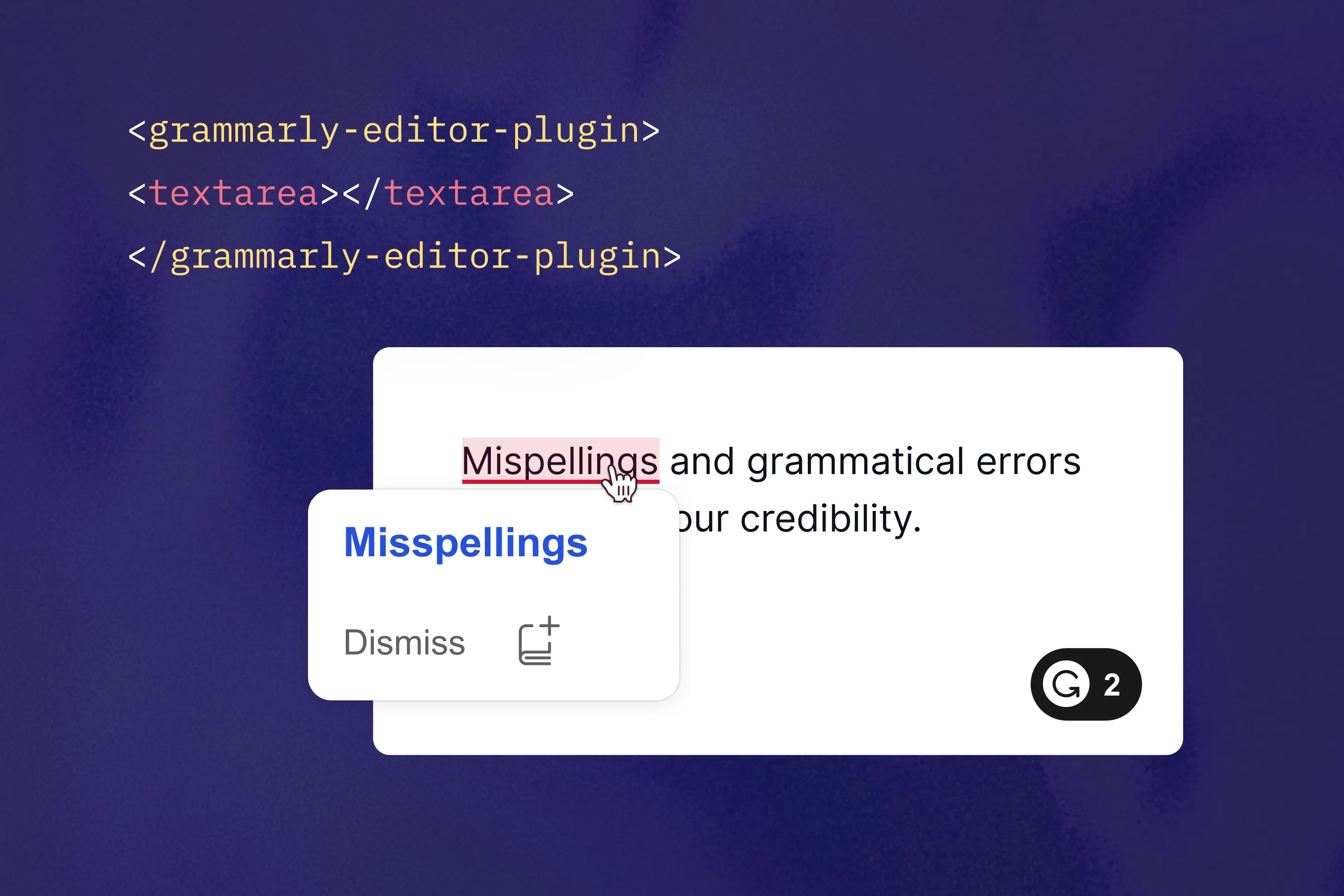
Grammarly for Developers was an entirely new business unit, created to bring Grammarly’s writing assistance to more users where their most important writing happens. Its first offering, the Text Editor SDK, let developers embed Grammarly into any text editor with just a few lines of code. It had two sides: the editor plugin, which brought Grammarly’s suggestions to writers inside our customers’ products, and the developer portal, where teams set up, configured, and monitored their integration.
I joined to lead design for the developer portal and later took over design for the editor plugin as well, refining the experience and adding new features. I worked within a tight-knit team of backend and frontend engineers, partnered with our newly formed Developer Advocate team, and initiated a sub-brand for our developer audience, taking the SDK from beta in 2021 to general availability in 2022.
The customer journey
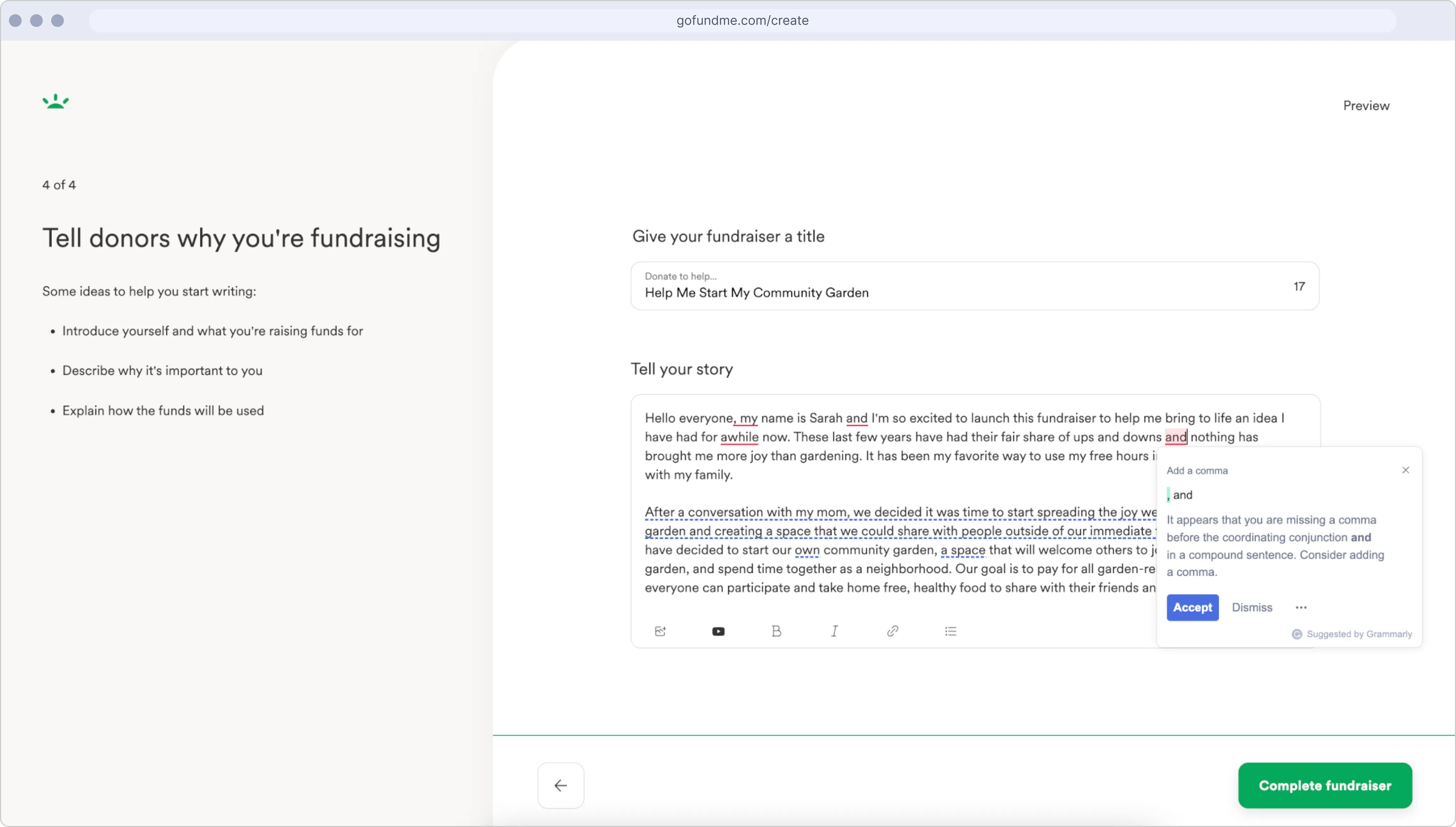
Our primary customer segment was marketplace apps like GoFundMe and G2 that relied heavily on user-generated content, even having their own content moderation teams review user submissions. They looked to Grammarly as the best-in-class solution to achieve their business objectives of reducing the number of rejections due to grammar mistakes.
We partnered with early adopter product teams, and these collaborations shaped three customer personas, each with a different stake in adopting the SDK.
The Developer
Loves trying new tech. Prototypes fast and wants to get something working quickly.
The Engineering Lead
Risk-averse and detail-oriented. Evaluates thoroughly before committing to anything in production.
The Product Owner
Leads a lean dev team and wants proof of value without spending engineering time.
Developers want to get something working quickly, engineering leads want to know whether it’s ready to ship, and product owners want to know whether it’s worth it. Together, they shaped how we thought about the full customer journey.
Seeing the value upfront
Whether a PM comes across the Text Editor SDK through an SEO search or a developer hears about it on Discord, the central touchpoint customers have with the SDK is the developer docs site. Besides documenting the SDK’s capabilities thoroughly, our goal for the docs site was to show the editor plugin’s value upfront.
This was challenging because Grammarly’s suggestions depend on the state of the text, and it’s difficult to write grammatically incorrect or awkward sentences intentionally. We also didn’t want to rely on static images of example suggestions because they wouldn’t fully convey the plugin’s capabilities.
To address this, I took inspiration from the way our own product teams tested the product. Our linguistics team maintained a large database of snippets that triggered specific Grammarly suggestions. With help from our content designers, we composed a series of sample texts that showcased a variety of suggestion types in different writing domains.
By rendering a mock text editor, we were able to embed the editor plugin directly on the docs site, showing developers how the real product worked. This demo experience also came in handy for sales teams, who used it to demonstrate the SDK’s capabilities live to potential customers.
Getting started quickly
Once a developer was ready to give the SDK a try, our goal was to get them to that “Hello world” moment with as little friction as possible. I designed the developer portal’s onboarding experience to lead with a quick start guide that takes developers straight to a working, testable integration in just three steps. The final step listens for the first API call and confirms the moment it connects, giving developers immediate proof their integration works.
Evaluating impact
With the editor plugin up and running, developers now wanted to know: is it working? Developers could access usage statistics as raw data via the API, but this required development work to view the data in a meaningful way. This was unrealistic for lean dev teams, so we built a reporting dashboard into the developer portal where product owners could review the plugin’s performance and easily share it with stakeholders.
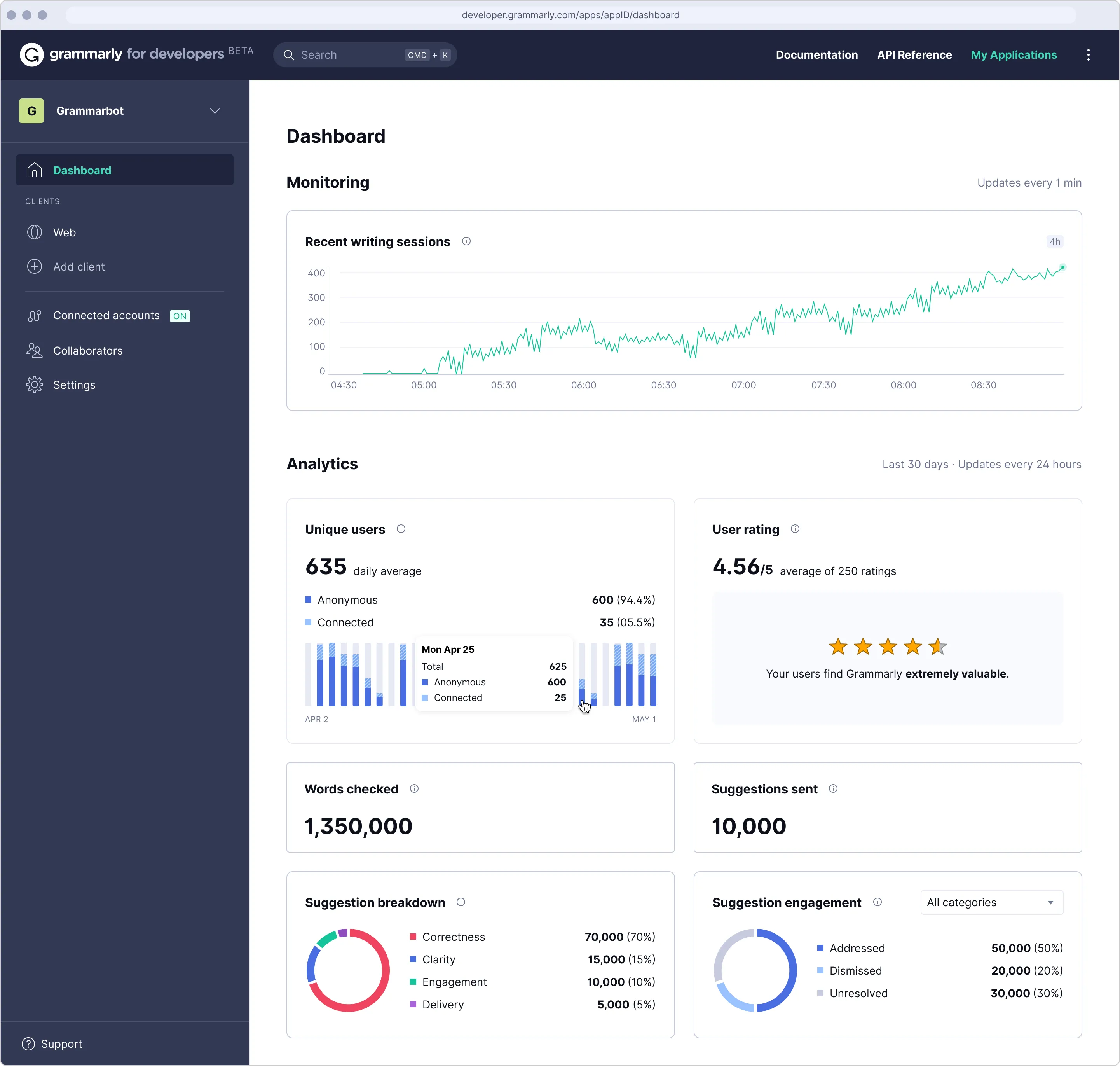
While the monitoring section shows writing activity happening in real time, the analytics section is designed to answer the bigger questions product owners have in mind. What impact is this having on our written content? What impact is this having on users?
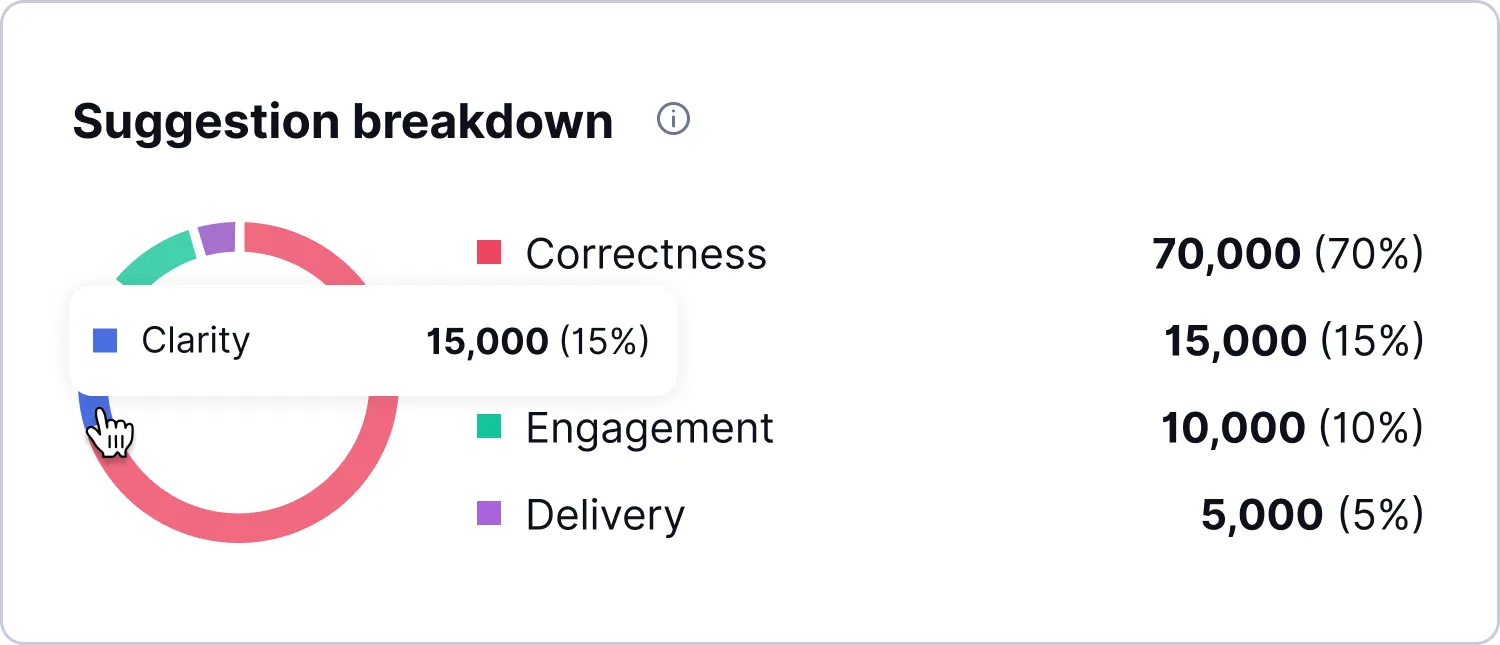
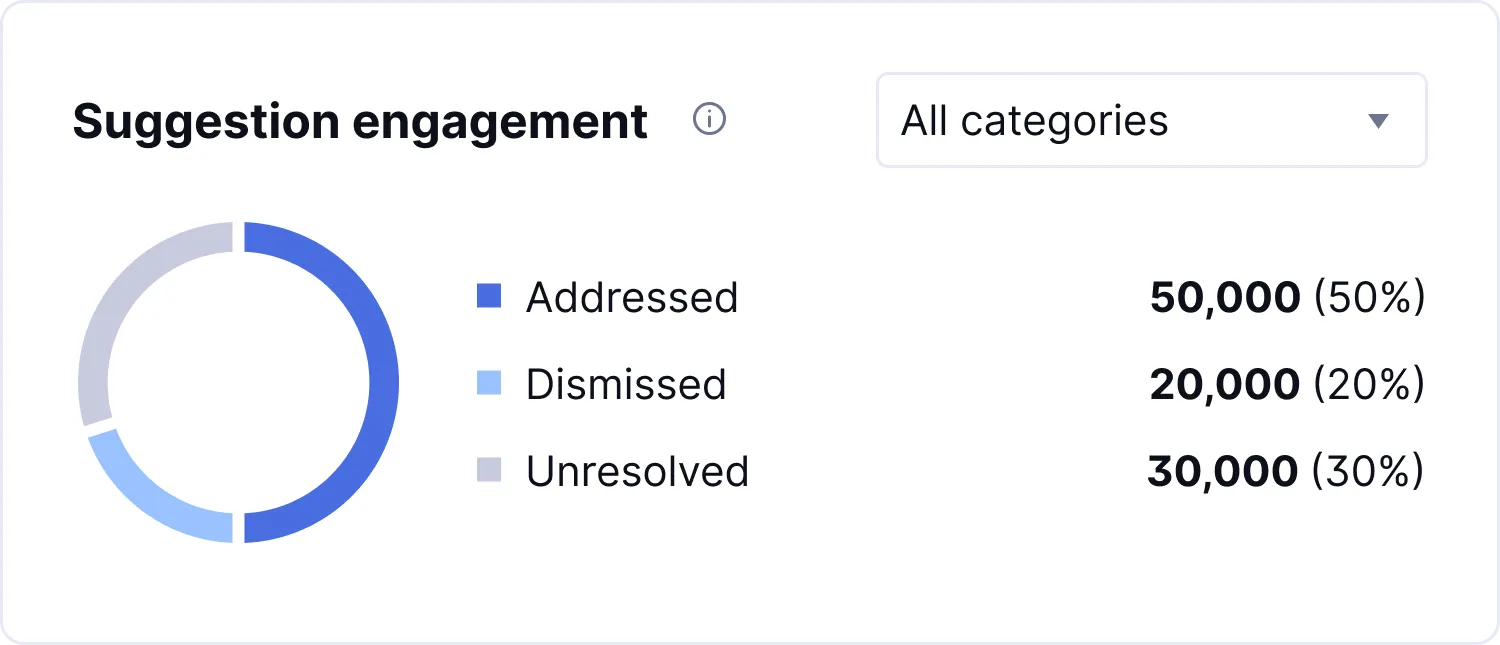
The breakdown of suggestion types gives insight into the kinds of writing issues that appear in the users’ texts, further validating the opportunity for Grammarly to address critical correctness issues. The suggestion engagement widget can be filtered by suggestion type to understand how users are responding to each category.
The strongest signal of Grammarly’s impact on our customers’ users came from the feedback surveys. Recognizing that the user’s ultimate goal is to write a clear email or a moving GoFundMe campaign, we were cautious not to disrupt the user’s workflow. We looked for signals that the user was in a revision mindset, tracking the number of suggestions accepted or dismissed within a writing session. After three interactions, we displayed a lightweight 5-star rating, followed by an optional open-ended question.
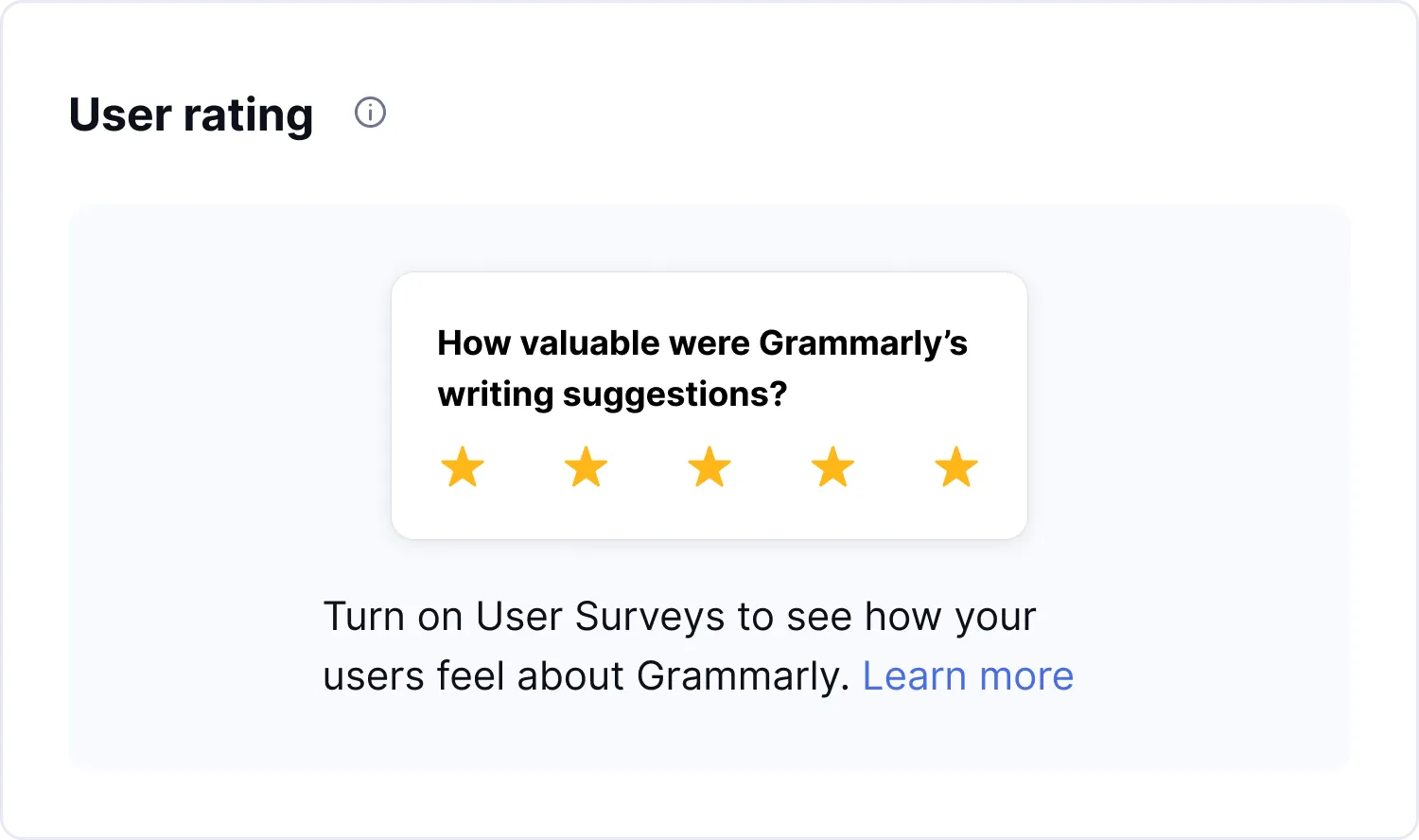
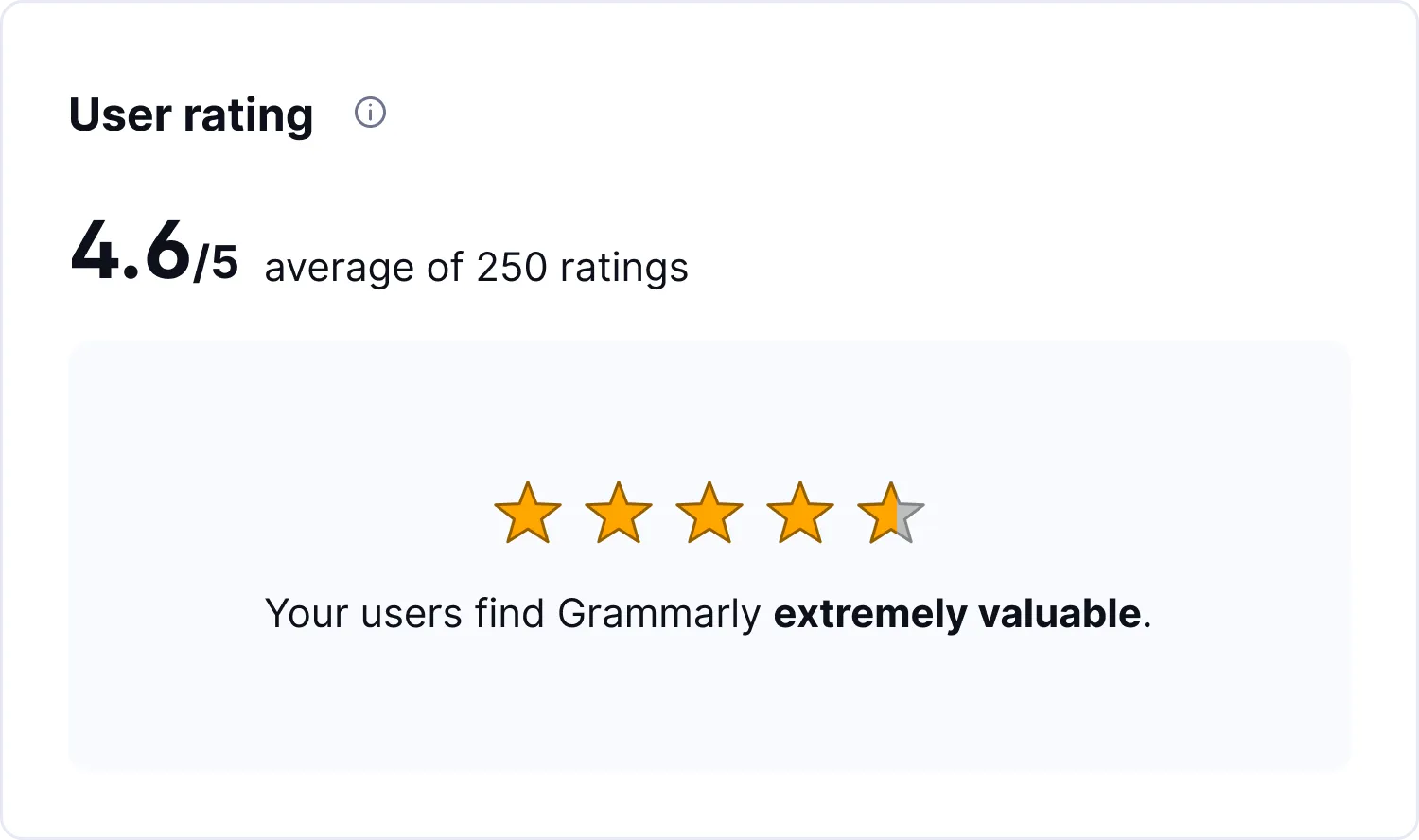
Presenting the user sentiment score on the dashboard gave product owners confidence that the editor plugin was positively impacting users, particularly because the plugin received an average rating of 4.6 stars.
Outcome
After a year in beta, the Text Editor SDK became generally available in September 2022. By then, thousands of developers, product managers, and founders had requested access, and the plugin had checked more than 8 billion words for over 2.9 million users writing in our customers’ products. At G2, half of the reviews approved each month included at least one Grammarly suggestion. Jellysmack’s users accepted over 75% of the suggestions they saw. Across all integrations, more than 34,000 users responded to our feedback survey with an average rating of 4.6/5, giving product owners the proof of value they were looking for.
In 2023, as Grammarly shifted its focus to generative AI, the company decided to sunset the SDK, and it was retired in January 2024. While the product didn’t live on, the improvements we made to the editor plugin were carried over into the core product.